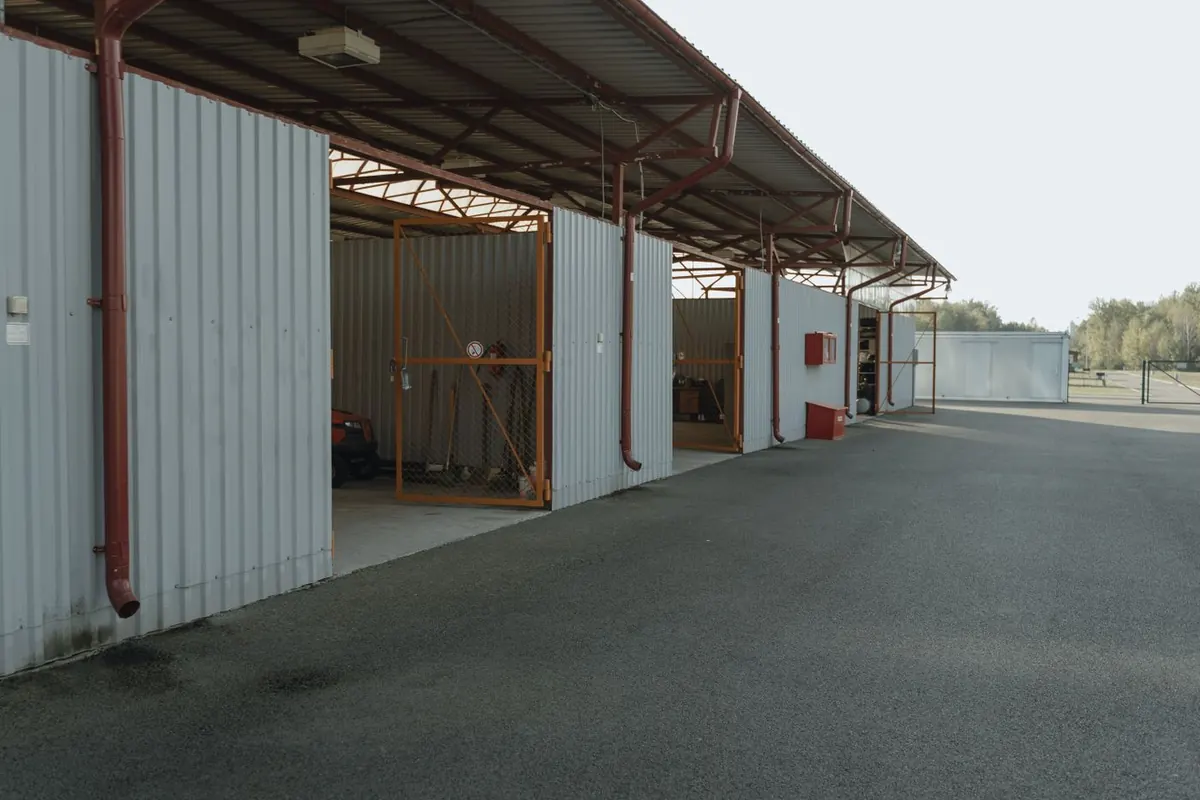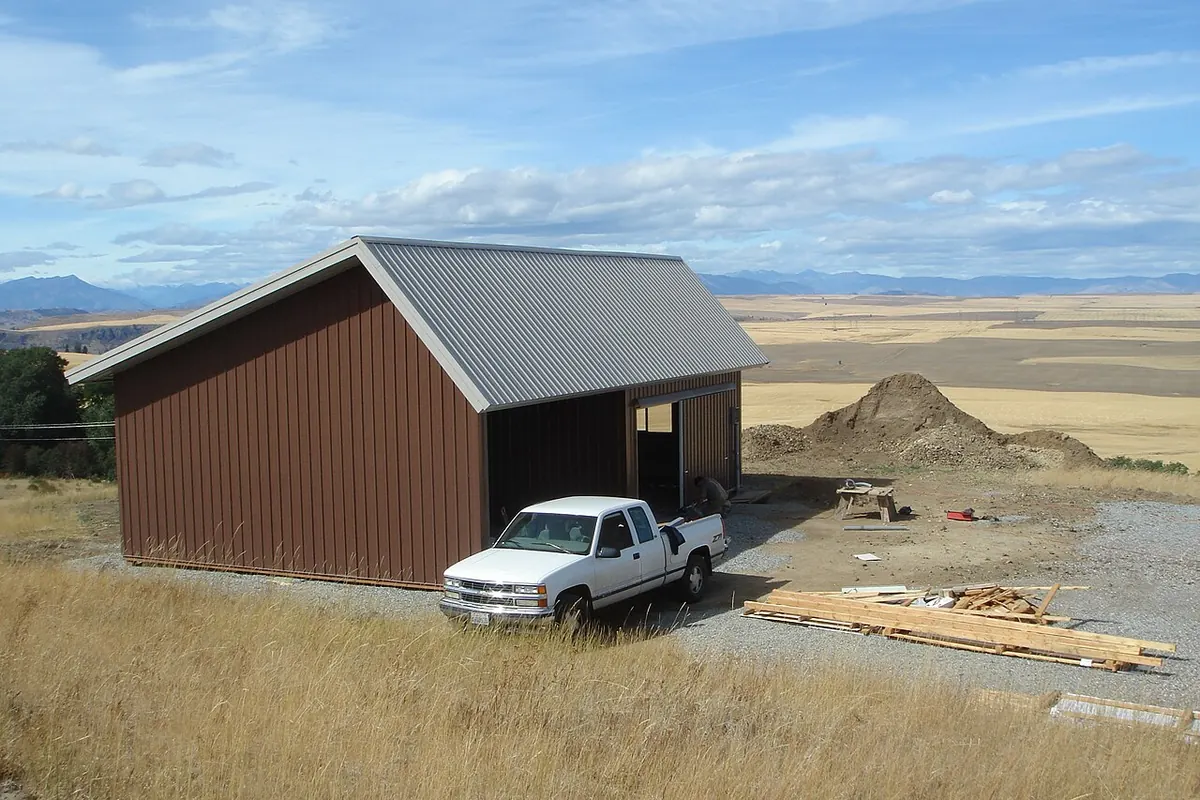
Shop slab cost in Houston: 30x40 and 40x60
The two sizes people price most are 30x40 and 40x60. Three published rates apply, and they bracket the real number well:
| Size | Houston model $5.62 to $11.24 | Houston garage floor $6 to $11 | MBMI basic $4 to $8 |
|---|---|---|---|
| 30x40 (1,200 sq ft) | $6,744 to $13,488 | $7,200 to $13,200 | $4,800 to $9,600 |
| 30x50 (1,500 sq ft) | $8,430 to $16,860 | $9,000 to $16,500 | $6,000 to $12,000 |
| 40x60 (2,400 sq ft) | $13,488 to $26,976 | $14,400 to $26,400 | $9,600 to $19,200 |
Swipe the table sideways to see every column →
Computed from projectcosted Houston (August 23, 2026), constructlytools Houston (May 16, 2026) and MBMI Steel Buildings (national, August 2026) per-square-foot ranges.
MBMI's figure is a national basic-slab number; the two Houston rates include local labor, which projectcosted puts at $27.41 an hour. The Houston slab cost page lists the clay add-ons.
How much concrete a shop slab takes
| Size | 4 in | 5 in | 6 in |
|---|---|---|---|
| 30x40 | 14.8 | 18.5 | 22.2 |
| 30x50 | 18.5 | 23.1 | 27.8 |
| 40x60 | 29.6 | 37.0 | 44.4 |
Swipe the table sideways to see every column →
Cubic yards before thickened edges and waste. At constructlytools' $125 to $160 per delivered yard in Houston, the 40x60 at 5 inches is roughly $4,630 to $5,926 of concrete alone.
The slab calculator does any other size.
Building a shop floor for what goes on it
Thickness where it matters
MBMI puts typical steel building slabs at 4 to 6 inches and 6 to 8 inches where heavy equipment sits. A shop rarely needs the heavy section everywhere. The thicker concrete goes where the loads are: the lift footprint, the bay a loaded trailer parks in, the strip a tractor crosses. The thickened edge under the walls and columns is set by the building's drawings; see metal building slabs.
Joints a big floor needs
NRMCA's joint guidance caps spacing at 24 to 36 times the thickness and never more than 15 feet, with panels kept nearly square and saw cuts made 4 to 12 hours after finishing. A 40x60 floor at 5 inches therefore needs a grid of joints, not one or two lines. Laying them out to land at column lines and door edges keeps cracks where they belong.
Aprons and slope
Houston gets a tenth of an inch of rain or more on about 64 days a year (NOAA normals for Bush Intercontinental). A shop floor should step down slightly at each door and the apron outside should fall away from the opening, so storm water and what drips off a truck end up outside.
Clay, base and steel under a Houston shop
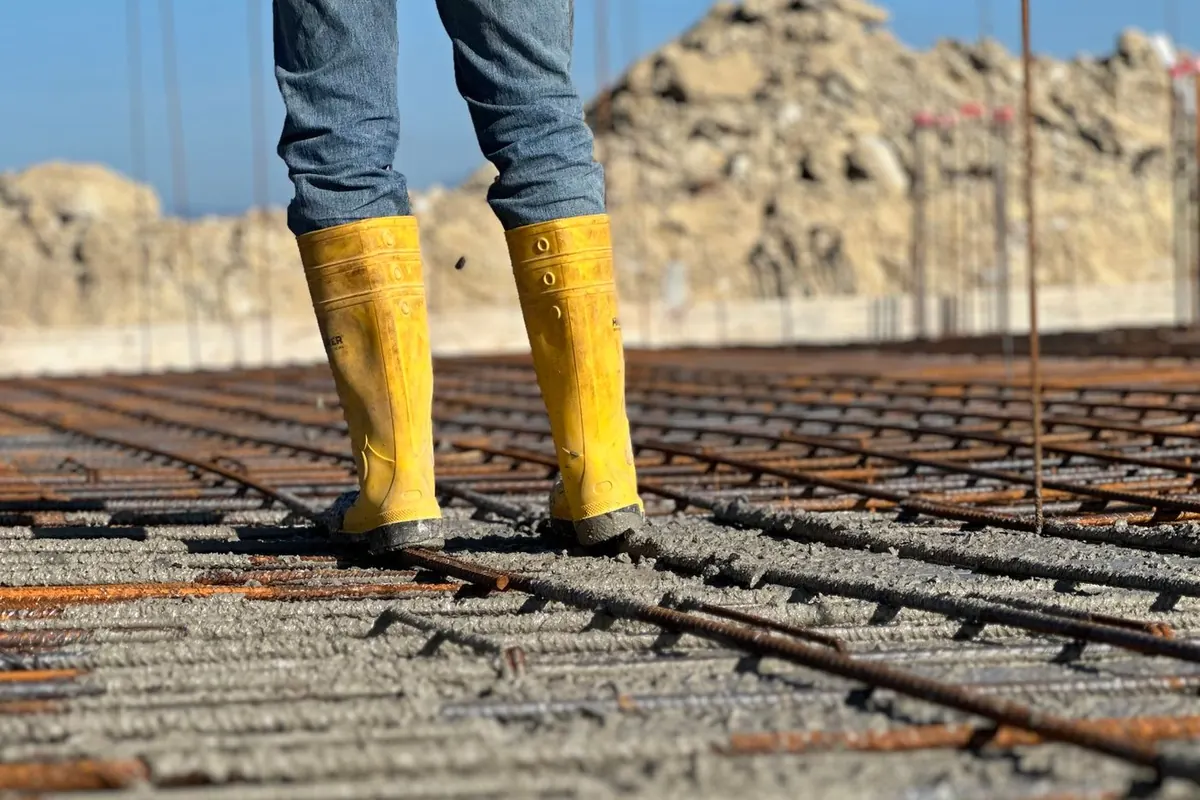
Most new shop buildings around Houston go up on the bigger lots toward Katy, Cypress and Tomball. To the west, the USDA's Lake Charles series is the common clay; it cracks 1 to 5 cm wide and stays open 60 to 90 days a year before closing up again. The base gets built up and compacted, steel is held up on chairs, and for larger buildings the engineer may specify post-tensioning. Steel type and spacing are covered in the thickness, rebar and vapor barrier guide.
For a shop slab quote
- Shop size and building type (metal kit, pole barn, framed)
- Door sizes and where they go
- Lifts, compressors, racks or equipment and where they sit
- Whether the shop will ever be air-conditioned or lived in
- Driveway or apron needs outside the doors