Houston weather by the numbers
NOAA's 1991 to 2020 climate normals for Bush Intercontinental put numbers on what every Houston contractor already plans for. The headline is water: 51.84 inches a year, against 36.25 inches in Austin on the same set of normals.
| Measure | Houston (Bush Intercontinental) |
|---|---|
| Annual precipitation | 51.84 in |
| Days with 0.1 in or more of rain | 64.4 |
| Days at 90 F or hotter | 111.3 |
| Days at 100 F or hotter | 7.0 |
NOAA NCEI 1991 to 2020 normals, station USW00012960 (Houston Bush Intercontinental).
Rain: the real Houston schedule risk
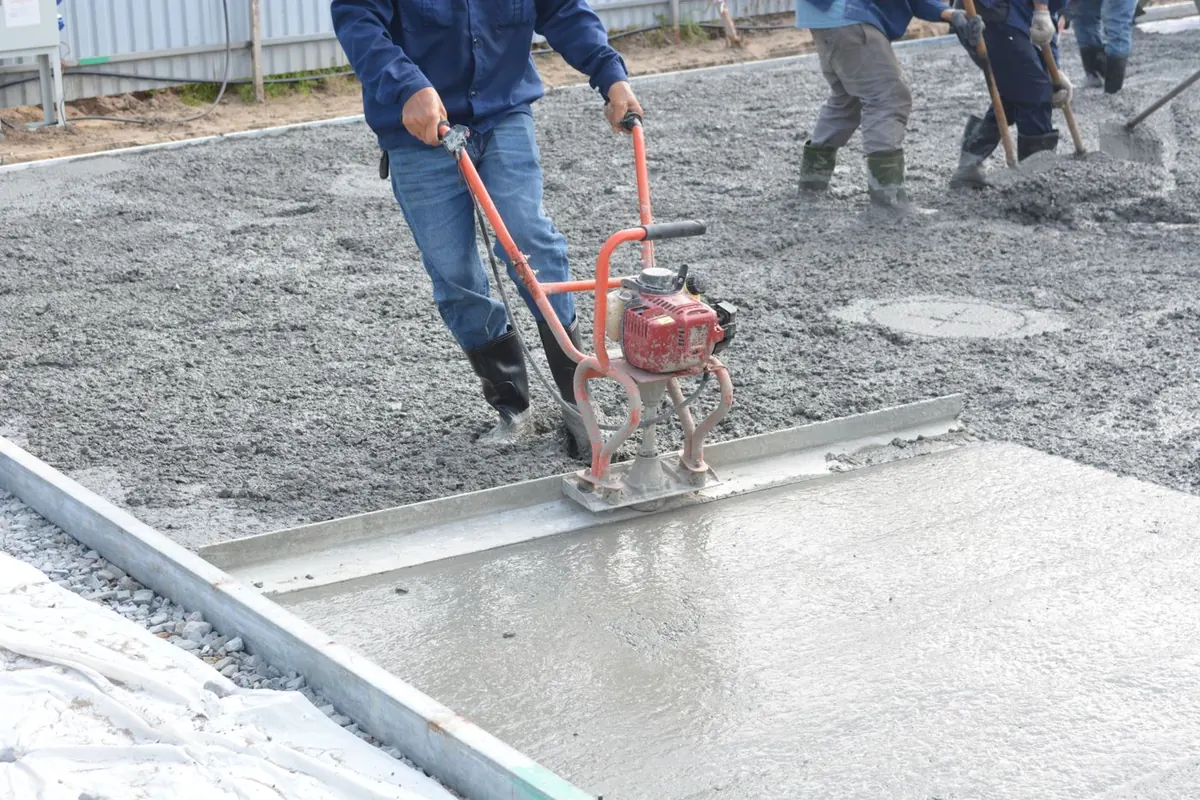
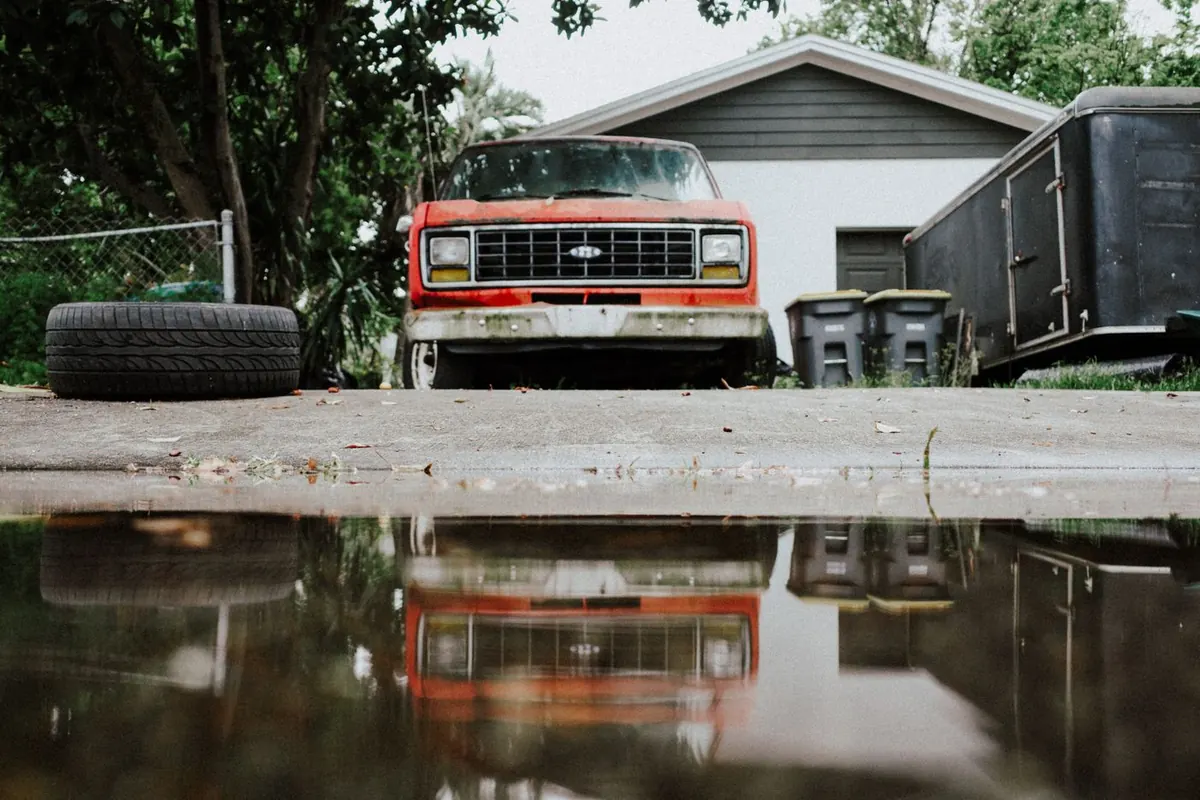
About one day in six brings a tenth of an inch of rain or more. Rain on fresh concrete is the problem: water worked into the surface during finishing weakens it and leaves a dusty, scaling top. And rain before the pour soaks the base, which on poorly drained Beaumont clay can take days to firm up again.
How pours are planned around it
- A backup date agreed in advance, so a wet forecast moves the pour without a new quote
- Base and forms protected or re-checked after rain; a soft base gets reworked, not poured on
- Plastic sheeting on site to cover a finished slab if a shower comes through
- No finishing with rainwater on the surface
- Drainage around the pad sorted before forms are set, so water doesn't sit against the edges
Heat: early starts and fast work
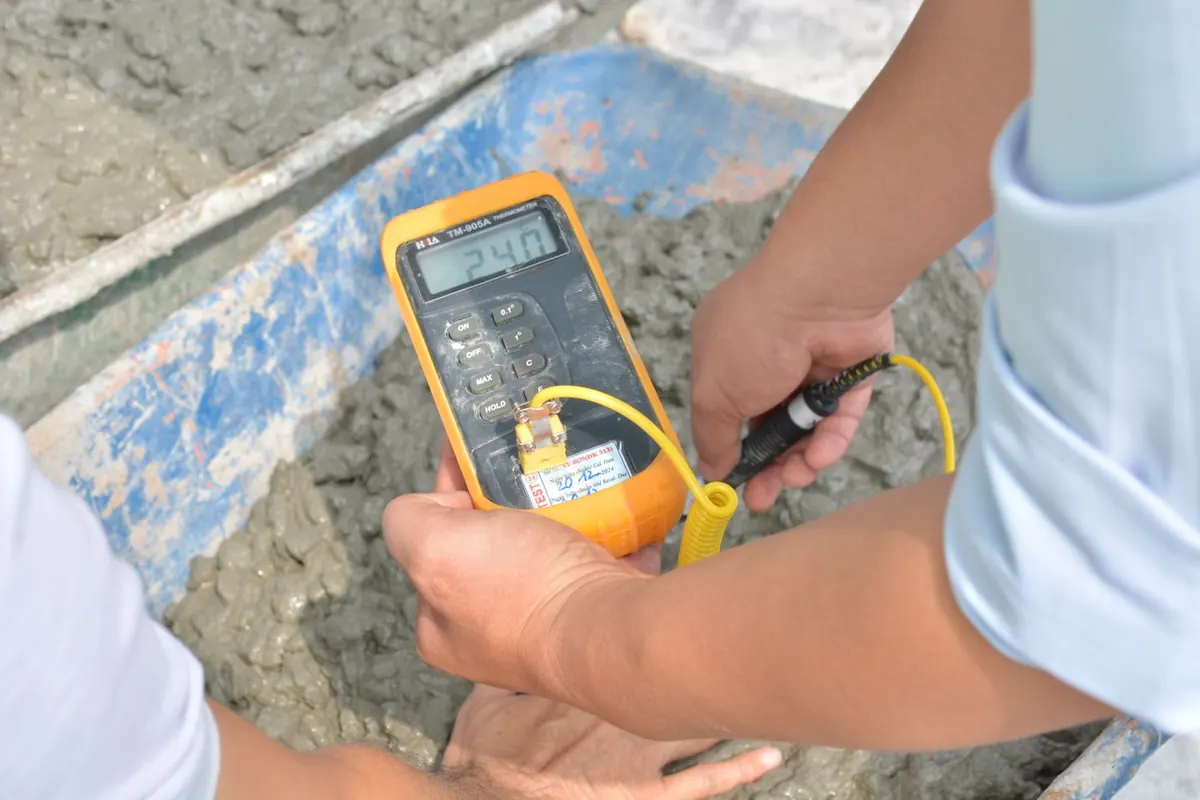
Houston's heat is long rather than extreme: 111.3 days a year at 90 F or more, but only 7 at 100 F. NRMCA's hot-weather guidance applies to all of them. Higher temperatures and humidity raise water demand and speed up slump loss and setting, and concrete cured hot ends up weaker than concrete cured near 70 F. The practical answers:
- Start early and avoid the hottest part of the day
- Chilled water or ice in the mix when the plant can provide it
- Enough hands to place and finish before the concrete gets ahead of the crew
- Never sprinkle water on the surface to make finishing easier
- Start curing as soon as finishing is done
Humidity and curing
Curing is keeping concrete moist and warm enough while it gains strength. NRMCA's curing guidance calls for 3 to 7 days of curing with the concrete kept above 50 F, and warns that concrete cured in a dry environment can lose up to 50% of its potential strength compared with moist-cured concrete. Houston's humidity works in the slab's favor here. Curing compound, which a Houston pricing guide puts at $0.15 to $0.30 per square foot, or wet coverings still go on, because sun and wind dry the top even on a humid day.
Where this shows up in a quote
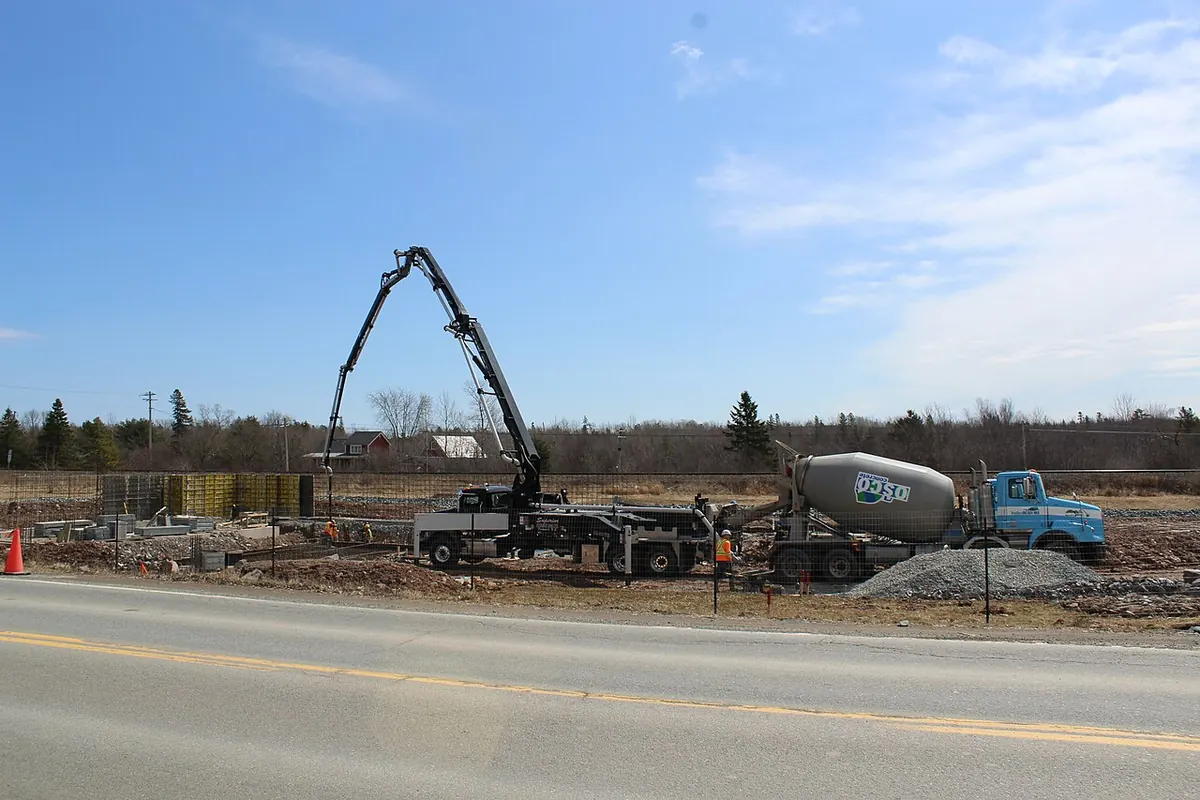
Weather shows up as schedule, curing method and sometimes a pump to place concrete faster. The Houston slab cost page lists curing compound and site prep as add-ons. Weather planning matters most on concrete patios and slab foundations, where the surface or the schedule can't easily be redone.