What a concrete pad installation in Houston involves
A pad is a slab with one job. That job sets everything else: its size, its thickness, how much steel goes in and how high it sits. A pad under an AC condenser and a pad under a two-post vehicle lift are both “concrete pads,” and they have very little in common past that.
| Pad for | What sets the size | Thickness guidance |
|---|---|---|
| AC condenser | Unit footprint plus service clearance | Equipment maker's installation manual |
| Standby generator | Unit footprint plus the maker's clearances | Equipment maker's installation manual |
| Shed or storage building | A little larger than the shed floor | 4 to 6 in typical (MBMI) |
| Hot tub | Spa footprint plus a step-out edge | At least 4 in reinforced; 6 in+ for swim spas (Bullfrog) |
| Shop equipment, lifts | The machine's base and anchor pattern | 6 to 8 in under heavy equipment (MBMI) |
| Trash bins, walkway landings | Bin count or door width | Light duty; the thin end of 4 to 6 in |
Thickness guidance from MBMI Steel Buildings (August 2026) and Bullfrog Spas' foundation guide. Equipment pads should follow the maker's written instructions where they exist.
Bigger pads for specific jobs have their own pages: shed pads, hot tub pads and RV and boat pads.
Base prep on Houston clay and a high water table
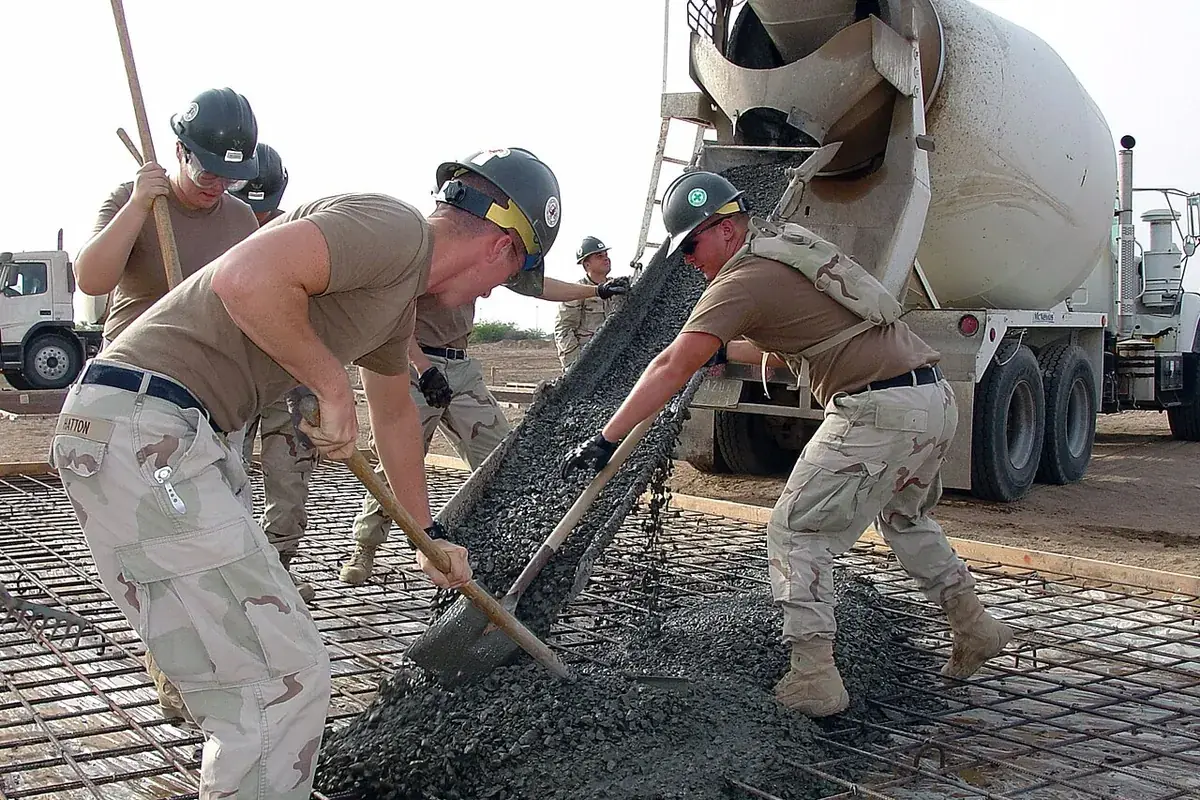
The pad is only as steady as what's under it. The USDA describes the Beaumont series, the clay under much of Harris County, as poorly drained with very slow permeability, and it records saturated conditions down through the whole soil profile it describes. In practice that means water sits on and in the ground long after a storm. A pad poured flush with the lawn sits in that water; one built up on a compacted base sheds it.
What we do differently on wet ground
- Strip the dark topsoil and any soft mud instead of compacting over it
- Build the base up so the finished pad stands proud of the yard
- Slope the top slightly so rain runs off, not toward the house
- Keep downspouts and AC condensate from emptying at the pad's edge
- Pour on a dry window; Houston gets a tenth of an inch of rain or more on about 64 days a year
The rainfall figure is NOAA's 1991 to 2020 normal for Bush Intercontinental. The humidity and rain guide covers pour-day planning in more detail.
Steel, joints and finish
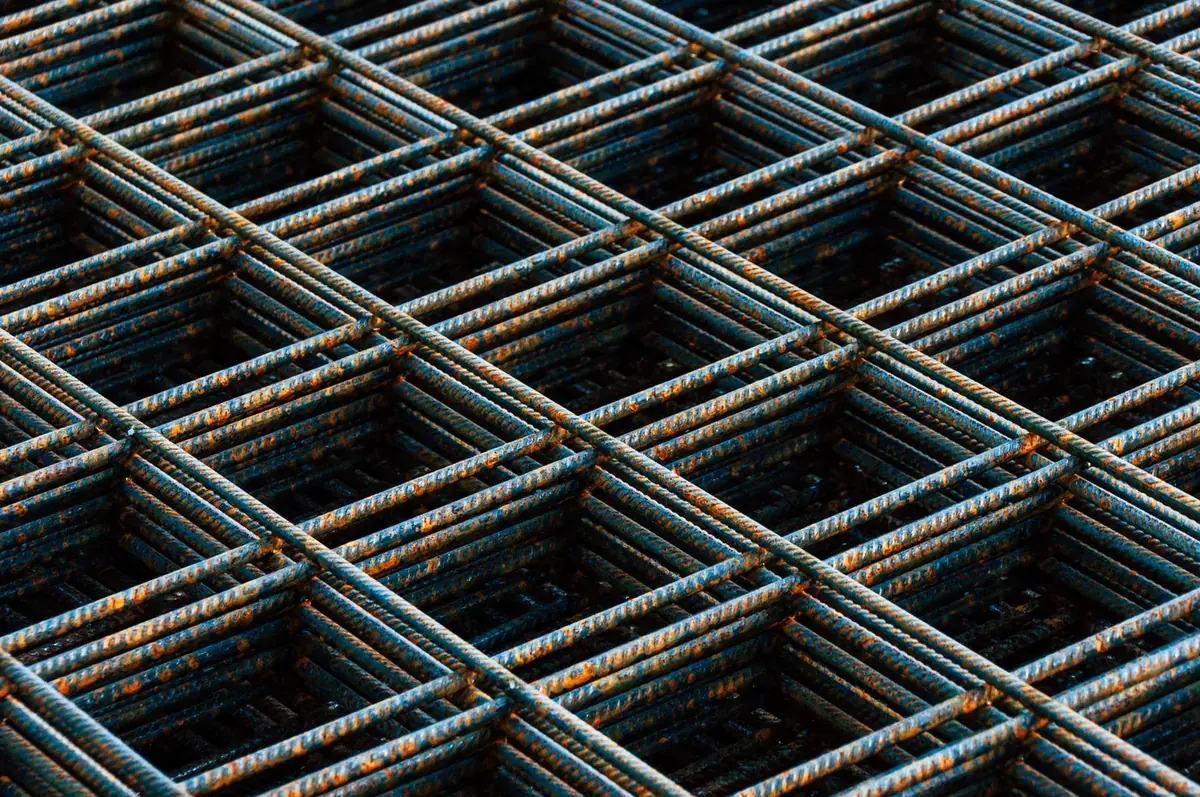
Small pads still crack if they aren't jointed. NRMCA's joint guidance sets the maximum spacing at 24 to 36 times the slab's thickness, about 10 feet on a 4 inch pad and never more than 15, with panels kept close to square (no more than 1.5 times as long as wide). Most equipment pads are small enough to need one joint or none. Steel is a separate question: general trade practice uses rebar where loads or clay movement are high and accepts welded wire mesh for light flatwork. The thickness, rebar and vapor barrier guide goes use by use.
How a pad goes in
- 1Mark the footprint and the fall
The pad is laid out a little larger than whatever sits on it, with the finished height and the direction water will run marked before any digging.
- 2Strip and dig out
Grass, roots and the soft, dark topsoil come out. On wet Beaumont clay, mud that won't firm up is dug out too rather than buried.
- 3Build the base
Crushed stone or select fill is placed and compacted so the top of the pad finishes above the surrounding ground, not level with it.
- 4Forms, steel and any conduit
Wood or steel forms are staked to grade, rebar or mesh is set on chairs, and any electrical or gas sleeve that has to pass through the pad goes in now.
- 5Pour, finish and joint
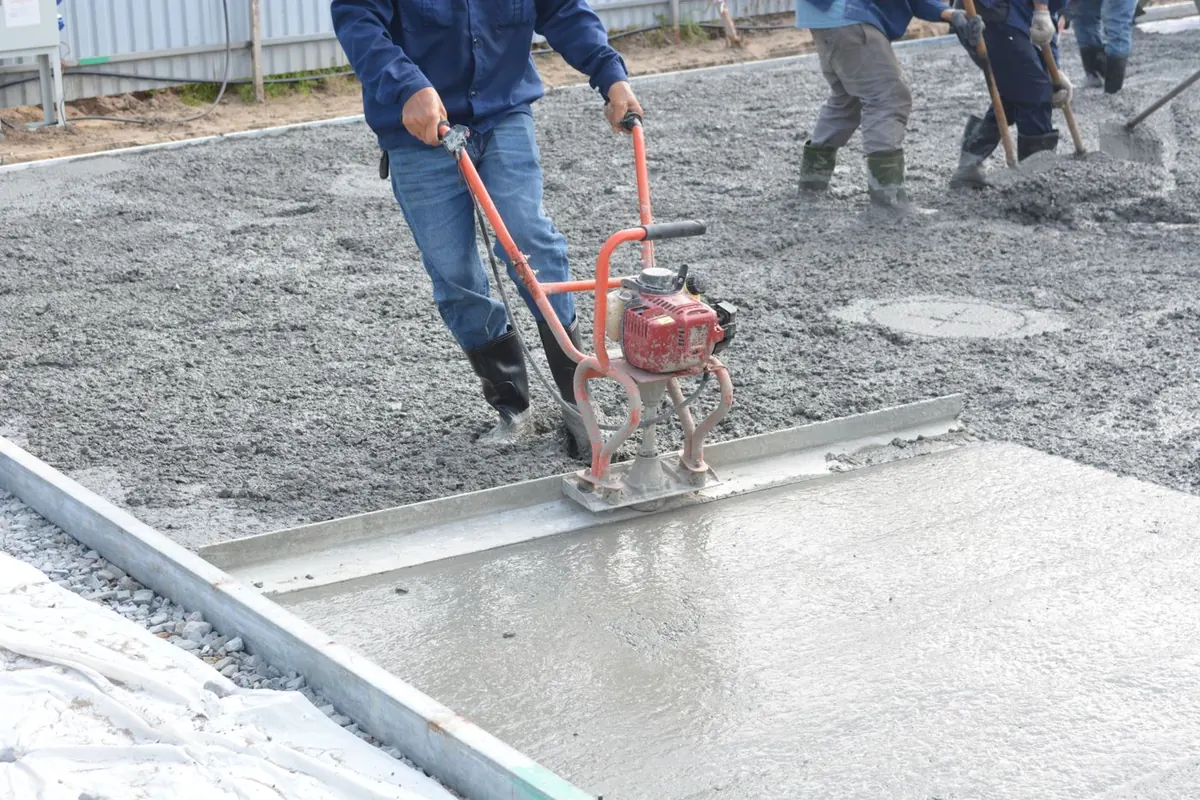
Concrete is placed, struck off, floated and broom-finished, and control joints are tooled or saw-cut within hours so cracks follow the lines.
- 6Cure
The pad is kept moist and covered for several days, longer in heat or wind, before equipment is set on it.
Permits and concrete pads in Houston
A plain pad is flatwork, and the City of Houston's residential code exempts driveway and sidewalk flatwork not covered by the Infrastructure Design Manual, with interior flatwork limited to 65% of the lot's total impervious area. If a building goes on the pad, the building is what needs checking: one-story detached accessory buildings of 120 sq ft or less are exempt, and anything larger goes through a permit. The Houston slab permit guide walks through it.
Concrete pad cost
Houston pricing for shed and storage pads runs $8 to $11 per square foot installed (constructlytools, May 2026), so a 10x12 pad prices at roughly $960 to $1,320 at that rate. The Houston slab and pad cost page has the size table and the clay add-ons.