Houston Concrete Slab Questions and Answers
Short answers on concrete slabs in Houston: price, permits, the City's height rules, clay, rain and curing. Each answer names where the number came from.
Get a Free QuoteHow much does a concrete slab cost in Houston?
projectcosted's Houston page (updated August 23, 2026) puts an installed slab at $5.62 to $11.24 per square foot, about 2% above the Texas average. That works out to $2,247 to $4,495 for a 400 sq ft slab. Thicker concrete for clay, extra steel and site prep are the usual add-ons.
Do I need a permit to pour a slab in Houston?
It depends on what sits on it. The City of Houston's code exempts a one-story detached accessory building of 120 sq ft or less, and driveway and sidewalk flatwork is exempt within its impervious-area limit. A slab under a house, an addition or a larger building goes through a building permit.
How high does a new slab have to be in Houston?
Citywide, Houston's amendment to IRC R401.5 puts the top of a new building's first floor at least 12 inches above the nearest sanitary sewer manhole rim. Inside the 100-year or 500-year floodplain, Chapter 19 sets new structures at the 500-year flood elevation plus 2 feet. The higher of the two wins.
Why do Houston slabs crack?
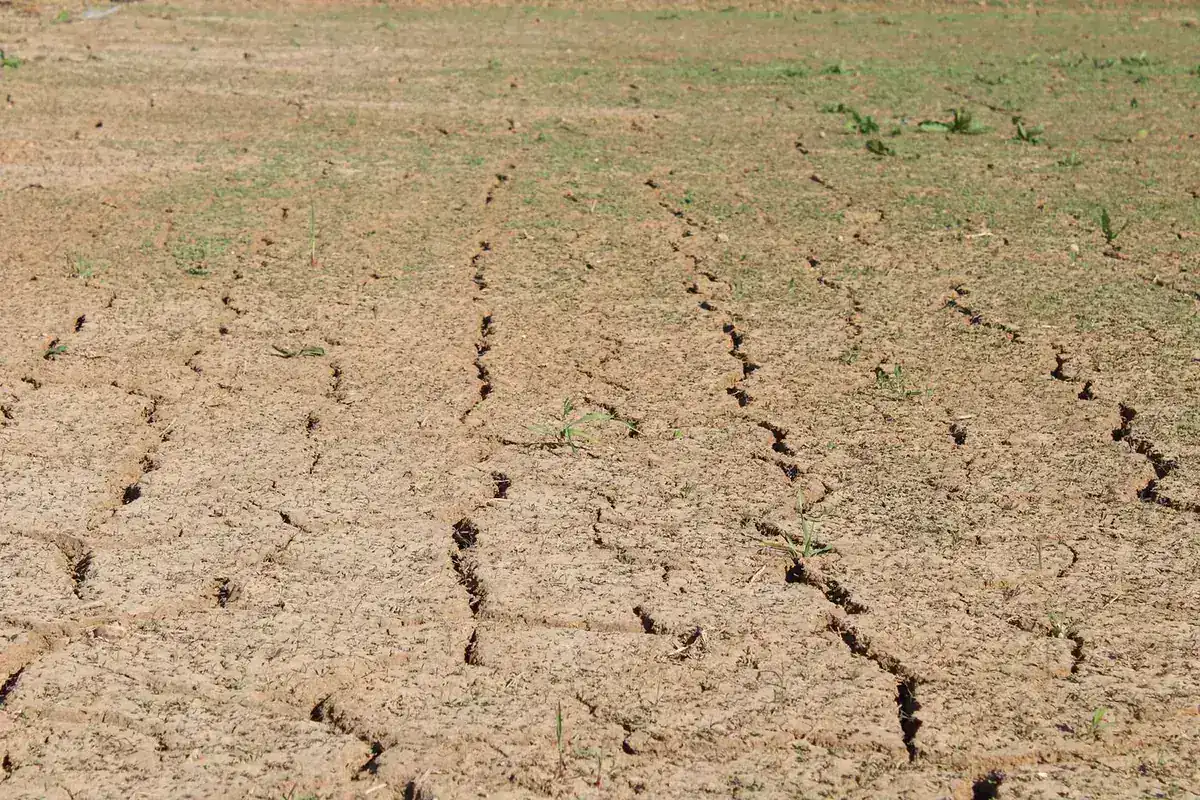
Mostly the clay. The USDA describes the Beaumont series, the Gulf Coast clay under much of the area, as a smectitic clay that cracks 1 to 2 cm wide and 30 cm deep when dry and swells when wet. A slab that isn't designed and drained for that movement cracks with it.
Is a post-tension slab better on Houston clay?
For house and building slabs it's the common choice. The Post-Tensioning Institute calls post-tensioned slabs a cost-efficient answer for ground-supported foundations on shrink-swell soils that cuts cracking. Small pads and patios are usually conventional rebar or mesh.
Does Houston Concrete Slabs do slab leveling or foundation repair?
No. Houston Concrete Slabs pours new concrete only. Mudjacking, foam lifting and pier repair are a different trade. If a slab is too far gone to level, a new pour is where we come in.
Monolithic slab or stem wall: which is better in Houston?
Both are slab foundations. A monolithic slab pours the thickened perimeter beam and the floor in one go; a stem wall raises the floor on a short foundation wall and backfill. Where Houston's 12 inch manhole-rim rule or a floodplain elevation pushes the floor up, raising it on fill or on a stem wall are the two usual routes, and the engineer picks.
Can I pour a concrete pad for a boat?
Yes. Size it for the trailer, not the hull: the tongue, the jack stand and the walking room around it all need concrete. Boat and RV pads are usually poured thicker than a patio because axle and jack loads land on small spots; MBMI's steel building guide uses 4 to 6 inches as typical and 6 to 8 where heavy equipment sits.
How long before I can drive on a new slab?
Curing guidance from NRMCA calls for keeping concrete moist for 3 to 7 days and above 50 F; vehicles wait longer than feet. Thickness, the mix and the weather all move the date, so ask for it in writing with the quote.
Can you pour concrete in the rain?
Not on purpose. Rain on fresh concrete washes the surface and leaves it weak and dusty. Houston averages 64.4 days a year with a tenth of an inch or more of rain, so most pours keep a backup date and plastic on hand.
What should a slab quote spell out?
Thickness, steel type and spacing, base material and depth, vapor retarder or not, joint spacing, finish, who hauls off spoils and old concrete, who pulls any permit, and what happens if it rains on pour day. Two quotes on different specs can't be compared.
Will a new slab flood?
A slab can't stop floodwater, but height can keep it below the floor. Inside the City of Houston, the floor of a new building has to clear the nearest sewer manhole rim by 12 inches, and in mapped floodplains Chapter 19 sets it at the 500-year flood elevation plus 2 feet.
Do I need a vapor barrier under a patio?
The residential code's vapor retarder rule (IRC R506.2.3) covers floor slabs under living space and exempts patios, driveways, unheated accessory buildings and other flatwork that won't be enclosed. Houston's wet ground makes one worth it anywhere the slab may later be closed in.
Who is Houston Concrete Slabs?
A new-pour concrete company for Houston and Harris County: slab foundations, post-tension slabs, footings, pads and building slabs. Quote requests come in through the form on this site.
More detail: Houston slab prices, permits, floodplain and slab height, service area or request a free quote.